

 English
 русский
 عربى
عربىIntroduction to Embossed PVC Film 1.1 Brief Overview of PVC (Polyvinyl Chloride) and Its Properties Polyvinyl chloride (PVC) is one of the most widely...
READ MOREMarble Pattern PVC Film: Guide & Uses
Content
- 1 Why Marble Pattern PVC Film Is Replacing Real Stone in Modern Interiors
- 2 How Marble Pattern PVC Film Is Made: Structure and Surface Technology
- 3 Faux Marble Film for Furniture: Application Guide by Surface Type
- 4 Achieving a Luxury Marble Look PVC Film Finish: Pattern Selection and Design Principles
- 5 Durability, Maintenance, and Long-Term Performance
Why Marble Pattern PVC Film Is Replacing Real Stone in Modern Interiors
Real marble has long been a symbol of luxury in interior design, but its practical limitations are significant. A standard marble slab costs between $60 and $200 per square foot installed, requires professional sealing every one to two years, and is highly susceptible to staining from acids like lemon juice or vinegar. For most homeowners and furniture manufacturers, these constraints make genuine marble an impractical choice.
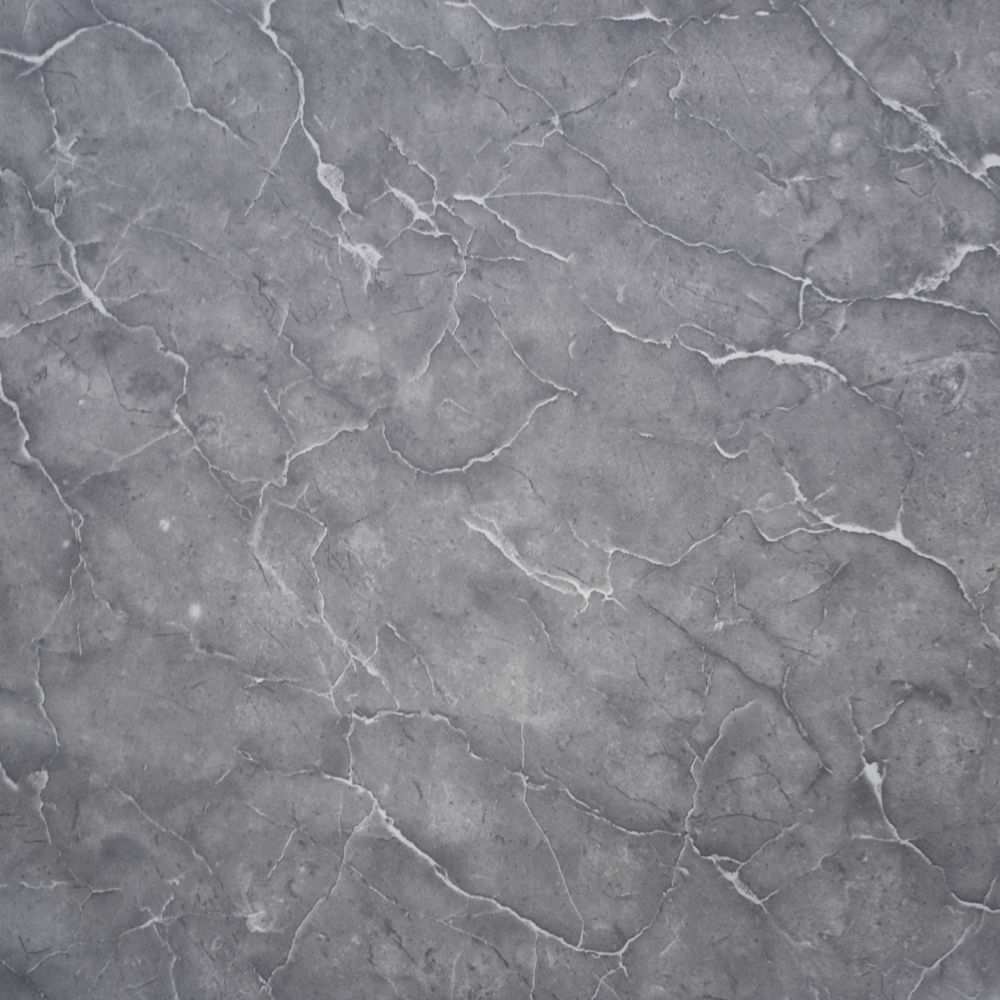
Marble pattern PVC film solves all three problems at once. Produced using high-resolution rotogravure printing combined with embossed surface texturing, modern PVC decorative films replicate the veining, depth, and tonal variation of natural marble with striking accuracy. The result is a surface that reads as stone to the eye and to the touch, at a material cost typically 90% lower than quarried marble.
This shift is reflected in the market. The global decorative film industry exceeded $25 billion in 2023, with stone-effect PVC films among the fastest-growing subcategories, driven by residential renovation, commercial fit-out, and furniture manufacturing sectors seeking cost-effective premium aesthetics.
How Marble Pattern PVC Film Is Made: Structure and Surface Technology
Understanding the construction of marble pattern PVC film helps buyers evaluate quality and make informed comparisons between product grades. A well-engineered film is not a single layer — it is a laminated composite, with each layer serving a specific function.
A standard construction from base to surface includes the following layers:
- Adhesive or backing layer: Either a pressure-sensitive self-adhesive with release liner for DIY application, or a plain back for factory lamination onto substrate panels using industrial adhesives.
- PVC base film: Typically 0.10–0.18 mm thick, providing dimensional stability and flexibility. Calendered PVC is standard; cast PVC is used in premium grades for superior conformability on curved surfaces.
- Printed décor layer: High-definition rotogravure or digital printing reproduces the marble veining pattern. Up to 10 color stations can be used to achieve the tonal complexity of Carrara, Calacatta, or Nero Marquina marble varieties.
- Wear layer and topcoat: A transparent PVC or polyurethane wear layer, ranging from 0.05 to 0.20 mm, protects the print from abrasion. The topcoat finish — matte, satin, gloss, or soft-touch — determines the final surface feel and light reflection behavior.
Films intended for furniture wrapping require a wear layer of at least 0.12 mm to withstand daily contact. Thinner films are adequate for wall applications where surface abrasion is minimal. Always verify the total film thickness and wear layer specification before ordering for a high-contact application.
Faux Marble Film for Furniture: Application Guide by Surface Type
Using faux marble film for furniture requires matching the film specification to the substrate and the wrapping geometry. Not all marble PVC films perform equally across every furniture application. The table below summarizes key recommendations:
| Furniture Surface | Recommended Film Type | Key Specification | Application Method |
|---|---|---|---|
| Flat tabletop (MDF/PB) | Self-adhesive, gloss or satin finish | Total thickness ≥ 0.25 mm | Squeegee lamination |
| Cabinet door (flat) | Plain back for press lamination | Good adhesion to PU primer | Vacuum membrane press |
| Curved cabinet profile | Cast PVC, high elongation | Elongation at break ≥ 180% | Heat gun + hand wrap |
| Countertop edge banding | Thick film, matte or stone-texture | Wear layer ≥ 0.15 mm | Edge banding machine |
| Shelf or drawer face | Self-adhesive, repositionable | Air-release liner recommended | Hand application |
For flat surfaces, surface preparation is the single most important variable. The substrate must be clean, dry, and free of wax or silicone residue. On raw MDF, a primer coat significantly improves long-term adhesion. On existing painted surfaces, lightly scuff with 220-grit sandpaper before applying self-adhesive film to prevent edge lifting over time.
When wrapping complex profiles or routed edges, warming the film to 40–50°C with a heat gun dramatically improves conformability and eliminates the risk of cracking at tight radii. Work in short sections, stretching the film gently rather than pulling it, to maintain uniform thickness across the wrapped surface.
Achieving a Luxury Marble Look PVC Film Finish: Pattern Selection and Design Principles
The difference between a convincing marble finish and one that reads as artificial usually comes down to three factors: pattern scale, vein continuity, and finish selection. Understanding these principles allows both designers and end users to extract the full visual potential from a luxury marble look PVC film.
Pattern Scale Relative to Surface Area
Natural marble slabs are large-format — a single slab from a quarry can measure 3 meters by 1.5 meters with continuous, non-repeating veining. PVC film is produced in rolls with a printed repeat, typically every 60 to 120 cm. On small surfaces such as drawer fronts or side panels, this repeat is invisible. On large continuous surfaces like kitchen islands or full wall panels, the repeat becomes apparent and breaks the illusion of natural stone. For large-format applications, specify films with a longer print repeat (90 cm or above) and plan seam placement to align the vein pattern across joints.
Choosing the Right Marble Variety for the Space
Not all marble patterns suit every interior context. The following distinctions help narrow the choice:
- Carrara white: Fine grey veining on a white ground. Works in small and large spaces; pairs naturally with chrome, brushed nickel, or light wood tones. Best suited for bathroom vanities, kitchen surfaces, and minimalist interiors.
- Calacatta gold: Bolder, more dramatic veining with warm gold tones. Creates strong visual impact; better reserved for feature furniture pieces, accent panels, or hospitality fit-outs rather than whole-room application.
- Nero Marquina: Deep black base with white veining. High-contrast and contemporary; effective as a single accent surface in kitchens or as a full-front treatment on dark furniture collections.
- Green or colored marble variants: Emerging in residential interiors influenced by maximalist and biophilic design trends; particularly effective on console tables, side tables, and decorative panels.
Surface Finish and Light Interaction
High-gloss topcoats maximize the depth and luminosity of the marble pattern, closely replicating the polished stone look. However, gloss finishes show fingerprints and minor scratches more readily, making them better suited for vertical surfaces or low-traffic horizontal applications. Satin and matte finishes sacrifice some visual depth but deliver a more practical surface for tabletops and counters, and they more closely mimic the honed marble aesthetic currently popular in contemporary design.
Durability, Maintenance, and Long-Term Performance
A common concern when substituting film for natural stone is longevity. In practice, high-quality marble pattern PVC film performs comparably to laminate surfaces and significantly outperforms paint finishes in terms of abrasion, moisture, and chemical resistance. Key performance characteristics to look for include:
- Abrasion resistance: Quality films rated to Taber abrasion standards (ASTM D4060) at 500 cycles or above are appropriate for furniture use. Wear layer thickness and hardness are the determining factors.
- UV stability: Interior-grade films with UV inhibitors in the topcoat resist yellowing and color fade for 5–8 years under normal indoor light conditions. Always confirm UV resistance rating for applications near windows.
- Moisture and chemical resistance: PVC film is inherently waterproof and resists most household cleaners. Avoid prolonged contact with strong solvents (acetone, MEK), which can attack the topcoat.
- Temperature tolerance: Standard PVC film is rated to 60°C continuous surface temperature. For surfaces near heat sources, specify films with a polyurethane or acrylic topcoat rated to 80°C or above.
Day-to-day maintenance is simple: wipe with a damp cloth and mild detergent. Unlike real marble, no periodic sealing is required, and there is no risk of acid etching from food or beverages. For furniture manufacturers, this ease-of-care profile is a genuine selling point that differentiates film-wrapped pieces from both natural stone and unprotected wood surfaces.
PREV:Waterproof Wood Grain Film for Cabinets: Performance, Selection & Application GuideNEXT:Smooth Surface PVC Decorative Film: The Marble Pattern Alternative That Outperforms Real Stone"
Interested in cooperation or have questions?
Media
-
-
1. Introduction to PVC Decorative Film 1.1 What is PVC Decorative Film? PVC decorative film, also known as vinyl film or PVC foil, is a thin, flexible...
READ MORE -
Introduction — Wood Grain PVC Decorative Film Overview and Market Positioning Wood Grain PVC Decorative Film has emerged as a versatile and innovative...
READ MORE


 +86-13855983898 +86-0559-3588289
 No. 41, Yongjia Avenue, Huizhou District, Huangshan City, Anhui Province, China
Copyright © Huangshan Hengying Industrial Co., Ltd. All Rights Reserved.