

 English
 русский
 عربى
عربىIntroduction to Embossed PVC Film 1.1 Brief Overview of PVC (Polyvinyl Chloride) and Its Properties Polyvinyl chloride (PVC) is one of the most widely...
READ MOREEmbossed PVC Decorative Film: Full Guide
Content
- 1 What Makes Embossed PVC Decorative Film Different from Flat Films
- 2 How Vacuum Forming Technology Creates the Embossed Surface
- 3 Surface Patterns Available and Their Decorative Impact
- 4 Compatible Substrates and How the Film Bonds to Each
- 5 Application Sectors and Specific Use Cases
- 6 Performance Properties That Define Quality in Embossed PVC Film
- 7 Selecting the Right Embossed PVC Film for Your Project
What Makes Embossed PVC Decorative Film Different from Flat Films
Embossed PVC decorative film is not simply a printed surface covering — it is a structurally textured material designed to replicate the tactile and visual qualities of natural surfaces with high precision. The defining characteristic is its three-dimensional surface relief, produced by pressing heated PVC film against engraved rollers or molds under controlled pressure. This process permanently deforms the film surface into raised and recessed patterns, creating depth that a printed flat film cannot replicate regardless of print resolution.
The practical consequence is a material that looks and feels fundamentally different from standard decorative laminates. When light hits an embossed surface, it reflects unevenly across the textured relief, producing the same visual behavior as the real material being imitated — wood grain, stone, fabric, or leather. This optical authenticity is one of the primary reasons embossed PVC film has displaced traditional flat laminates across furniture, construction, and interior design applications worldwide.
How Vacuum Forming Technology Creates the Embossed Surface
The textured design on embossed PVC decorative film is achieved through vacuum forming technology, a process that allows the film to conform precisely to complex three-dimensional shapes on substrate surfaces. In this process, the PVC film is heated to its softening point and then drawn tightly over a substrate using negative air pressure. The film stretches uniformly across the surface, capturing every contour, edge, and recessed detail of the mold or substrate beneath it.
Vacuum forming is particularly powerful because it enables the creation of intricate surface patterns that would be impossible to achieve through flat lamination. Three-dimensional carvings with sharp edges and deep relief, antique wood grains with realistic pore structures, geometric lattice patterns, and raised panel profiles can all be accurately reproduced. The vacuum pressure ensures that even narrow channels and tight corners receive uniform film coverage without air pockets or delamination — critical for long-term adhesion quality.
This technology also supports high-volume production without sacrificing pattern consistency. Once master tooling is established, each production run reproduces the same surface geometry with minimal variation, which is essential for furniture manufacturing and building material applications where pattern matching across panels is required.
Surface Patterns Available and Their Decorative Impact
The range of surface patterns achievable with embossed PVC film is broad, and each category serves a distinct decorative and functional purpose. Understanding which pattern type suits a given application helps designers and procurement teams make more effective material selections.
Antique Wood Grain
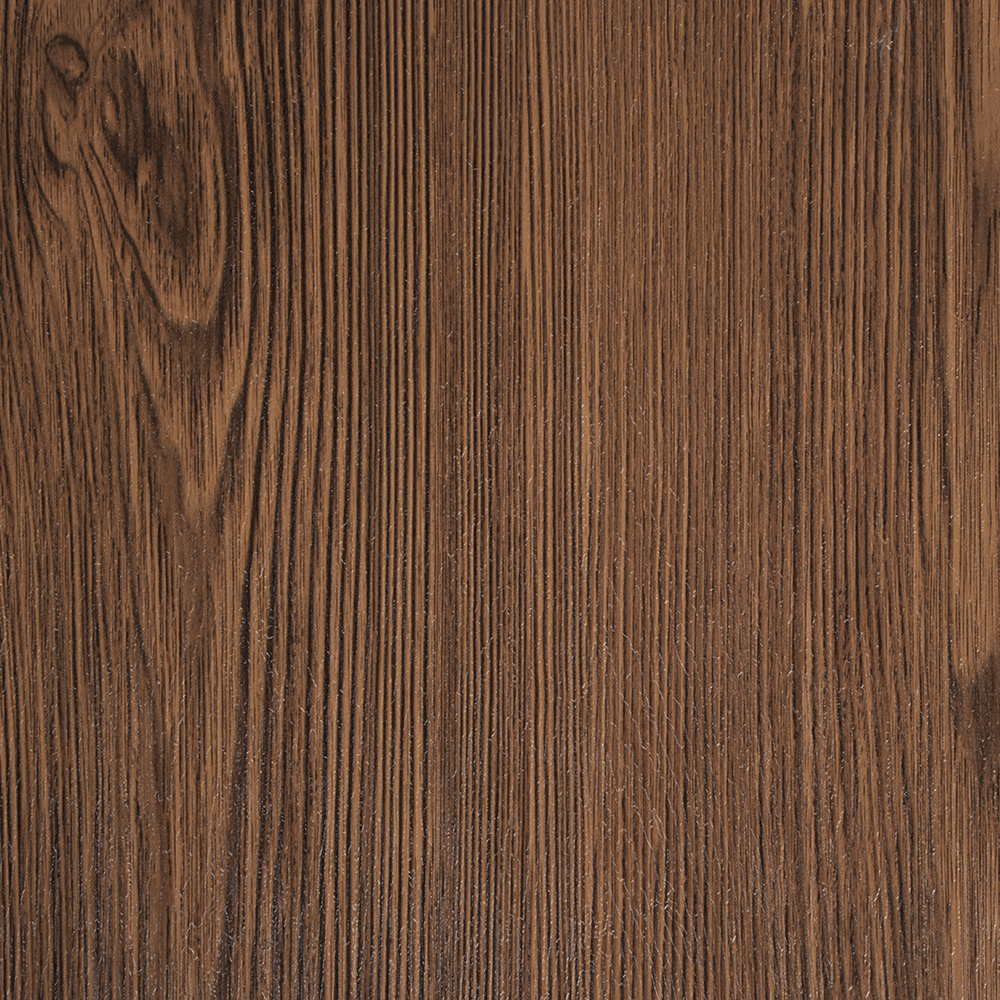
Antique wood grain patterns combine printed ink layers with embossed surface relief to replicate the appearance of aged timber. The embossing introduces realistic pore depth and ring variation that make the surface visually indistinguishable from real wood at normal viewing distances. This pattern is the most widely used in residential furniture, cabinet doors, and interior wall paneling.
Three-Dimensional Carvings
Three-dimensional carving patterns simulate the appearance of hand-carved or machined decorative surfaces. These patterns add strong visual depth and artistic expression to flat panel substrates, making them popular for high-end furniture door frames, decorative moldings, and classical interior design elements where sculptural surface detail is desired without the cost of real carved wood.
Geometric and Abstract Textures
Modern interior design applications increasingly use geometric emboss patterns — linen textures, brushed-metal effects, concrete finishes, and grid reliefs — to create contemporary surfaces on furniture and wall cladding. These patterns are commonly applied to metal sheets and gypsum boards where a clean, architectural aesthetic is required.
Compatible Substrates and How the Film Bonds to Each
Embossed PVC decorative film is engineered to bond to a variety of substrate materials, each requiring slightly different adhesive systems or surface preparation protocols. The most commonly used substrate types include:
- MDF (Medium Density Fiberboard): MDF is the most common substrate for embossed PVC film in furniture manufacturing. Its smooth, pore-free surface provides consistent adhesion, and its dimensional stability prevents film lifting at edges. Vacuum forming works exceptionally well on MDF routed profiles and shaped door fronts.
- Metal sheets: Steel and aluminum panels are used as substrates in appliance panels, vehicle interiors, and architectural cladding. Embossed PVC film applied to metal provides both decorative finish and a degree of surface protection against minor scratches and corrosion from handling.
- Gypsum boards: In interior wall and ceiling applications, embossed PVC film is applied to gypsum boards to create decorative feature panels. The film adds moisture resistance to the surface layer, extending service life in areas with moderate humidity.
- Other board materials: Plywood, particleboard, and PVC foam boards are also compatible substrates depending on application requirements. Each requires surface priming or specific adhesive selection to ensure long-term bond performance.
The adhesive system must be matched carefully to both the substrate and the end-use environment. For interior furniture applications, solvent-based or hot-melt adhesives are standard. For vehicle interiors where temperature fluctuation is significant, pressure-sensitive adhesive systems with higher thermal stability are preferred.
Application Sectors and Specific Use Cases
The versatility of embossed PVC film across different material substrates and forming processes has enabled its adoption across a broad range of industries. The following table summarizes key application sectors and their specific use cases:
| Sector | Typical Substrate | Common Applications |
|---|---|---|
| Furniture | MDF, particleboard | Cabinet doors, wardrobe panels, drawer fronts, table surfaces |
| Building materials | Gypsum board, MDF, metal sheets | Wall panels, ceiling tiles, door skins, skirting boards |
| Vehicle interiors | Metal sheets, plastic panels | Dashboard trims, door liners, console covers, headliner panels |
| Commercial interiors | MDF, gypsum board | Reception desks, display units, retail shelving, partition walls |
Vehicle interior applications represent a particularly demanding use case. In this environment, the embossed PVC film must withstand temperature cycling between -20°C and 80°C or beyond, UV exposure through windows, and sustained mechanical contact from occupants. Films formulated for automotive use incorporate UV stabilizers, plasticizers with low migration rates, and surface coatings that resist abrasion and staining over a multi-year service life.
Performance Properties That Define Quality in Embossed PVC Film
Not all embossed PVC film products offer equivalent performance. When evaluating suppliers or comparing product specifications, the following properties determine whether a film will deliver long-term value in its intended application:
- Emboss depth and definition: Shallower embossing produces less convincing visual depth. High-quality film maintains sharp emboss edges and consistent depth across the full roll width, critical for pattern matching in paneled installations.
- Print registration accuracy: The printed color layer must align precisely with the emboss pattern so that, for example, the dark shadow tones in a wood grain print fall within the recessed pores of the emboss. Misregistration creates a flat, unconvincing appearance.
- Surface coating durability: Topcoat hardness determines scratch and abrasion resistance. Furniture and building material applications require coatings rated to withstand everyday contact without loss of gloss or surface integrity.
- Dimensional stability: The film must not shrink or expand significantly with temperature changes after application. Dimensional instability causes edge lifting, surface bubbling, and joint gaps over time.
- Formability under vacuum: Film intended for vacuum forming must soften uniformly at processing temperature and stretch without tearing or thinning excessively over sharp substrate profiles.
Selecting the Right Embossed PVC Film for Your Project
Choosing the correct embossed PVC decorative film specification starts with a clear understanding of the substrate, the forming process, and the end-use environment. For flat lamination onto MDF or gypsum board, a standard thickness between 0.15 mm and 0.30 mm with pressure-sensitive or solvent adhesive backing is typically sufficient. For vacuum forming over routed MDF profiles and shaped cabinet doors, a thicker and more formable grade — generally 0.35 mm to 0.50 mm — is required to ensure the film stretches evenly without rupturing at corners.
For vehicle interior applications, material selection must account for off-gassing requirements, flame retardancy standards, and long-term UV stability. Always request test data for heat aging, UV resistance, and peel adhesion before committing to a product for automotive use.
Finally, consider the visual scale of the emboss pattern relative to the finished panel size. Deep, large-scale carving patterns read well on wide door fronts and wall panels but can appear cluttered on narrow drawer faces or small trim components. Fine wood grain embossing is more versatile across different panel dimensions and adapts naturally to a wider range of interior design styles. Matching the emboss scale to the application format is a straightforward step that significantly improves the finished aesthetic quality of the installation.
PREV:Smooth Surface PVC Decorative Film: The Marble Pattern Alternative That Outperforms Real Stone"NEXT:Wood Grain PVC Film vs. Natural Veneer: Which Is Better?
Interested in cooperation or have questions?
Media
-
-
1. Introduction to PVC Decorative Film 1.1 What is PVC Decorative Film? PVC decorative film, also known as vinyl film or PVC foil, is a thin, flexible...
READ MORE -
Introduction — Wood Grain PVC Decorative Film Overview and Market Positioning Wood Grain PVC Decorative Film has emerged as a versatile and innovative...
READ MORE


 +86-13855983898 +86-0559-3588289
 No. 41, Yongjia Avenue, Huizhou District, Huangshan City, Anhui Province, China
Copyright © Huangshan Hengying Industrial Co., Ltd. All Rights Reserved.