

 English
 русский
 عربى
عربىIntroduction to Embossed PVC Film 1.1 Brief Overview of PVC (Polyvinyl Chloride) and Its Properties Polyvinyl chloride (PVC) is one of the most widely...
READ MOREPVC Decor Film: What It Is, Where It's Used, and How to Choose the Right One
Content
- 1 What Is PVC Decor Film and Where Is It Used?
- 2 How PVC Decor Film Is Made: Layer Structure and Construction
- 3 Main Types of PVC Decorative Film by Application Method
- 4 Surface Finishes Available in PVC Decor Film
- 5 Key Performance Properties to Specify When Sourcing PVC Decor Film
- 6 PVC Decor Film for Furniture: Most Common Applications
- 7 PVC Decor Film vs. Other Surface Finishing Materials
- 8 How to Evaluate and Select a PVC Decor Film Supplier
What Is PVC Decor Film and Where Is It Used?
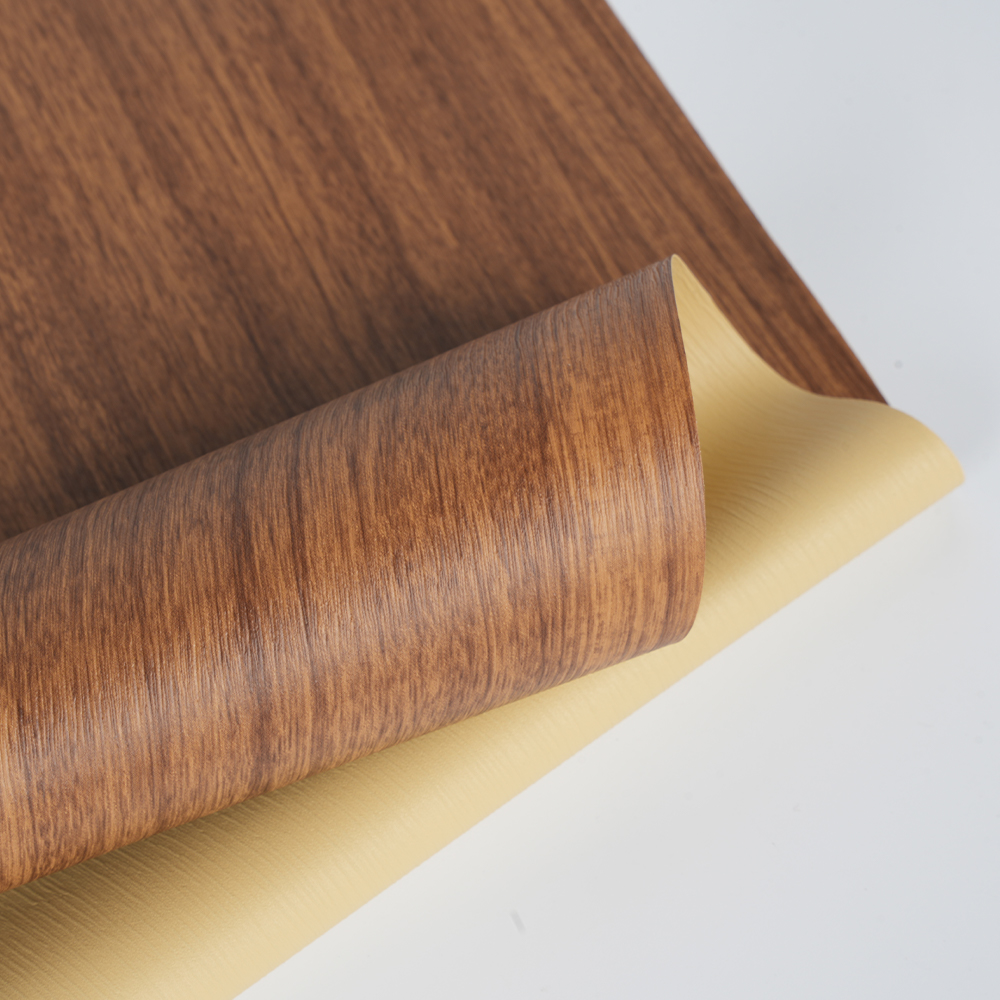
PVC decor film is a flexible, printed, and often textured polyvinyl chloride sheet product applied to the surface of substrate materials — such as MDF, particleboard, PVC profiles, foam board, and metal — to deliver a decorative finish without the cost or complexity of using solid wood, natural stone, or other premium surface materials. The film is engineered to replicate the appearance of wood grain, marble, concrete, fabric, solid color, metallic finishes, and dozens of other visual effects with remarkable fidelity, transforming plain industrial substrates into furniture panels, wall cladding, cabinet doors, window profiles, and flooring underlays that look and feel like premium materials.
PVC decorative film is one of the most widely used surface finishing materials in the global furniture and building products industries. Its combination of print quality, physical durability, cost efficiency, and ease of application makes it the go-to choice for flat lamination, membrane pressing, profile wrapping, and thermal transfer operations across furniture manufacturing, interior fit-out, and construction component production. Understanding the different types, constructions, and application methods of PVC decor foil is essential for anyone sourcing, specifying, or processing this material at a production scale.
How PVC Decor Film Is Made: Layer Structure and Construction
PVC decorative film is not a single-layer product. It is a multi-layer laminate, and the quality, performance, and suitability of any given film for a specific application is largely determined by how those layers are engineered and combined. Understanding the construction helps buyers evaluate competing products beyond surface aesthetics.
The Base Film Layer
The foundation of any PVC decor film is the base or carrier film — a calendered or cast PVC sheet, typically 0.10mm to 0.50mm thick, that provides the structural backbone of the product. Calendered PVC base films are produced by passing molten PVC compound between a series of heated rollers under pressure, resulting in a film with consistent thickness and good dimensional stability. Cast films, produced by spreading liquid PVC compound onto a release surface and curing it, offer superior thickness uniformity and surface smoothness but at higher cost. The base film's plasticizer content, filler loading, and stabilizer system determine its flexibility, heat resistance, and long-term aging performance.
The Print Layer
The decorative design — whether wood grain, stone, solid color, or abstract pattern — is applied to the base film using gravure printing, a high-resolution rotary printing process that uses engraved cylinders to deposit ink in precise patterns at high speed. Gravure printing on PVC decor film routinely achieves 150–200 line resolution, producing photorealistic wood grain and marble patterns indistinguishable from the real material at normal viewing distances. The ink system must be specifically formulated for PVC substrate adhesion and must resist plasticizer migration from the base film, which can cause ink delamination or color shift over time if incompatible ink chemistry is used.
The Wear and Protective Top Layer
Over the print layer, a transparent protective coating or overlay is applied to protect the design and provide the film's surface performance properties. This top layer can be a lacquer coating, a PVC overlay film, or a UV-cured acrylic or polyurethane coating, depending on the film's intended application and performance tier. The top coat determines the film's gloss level (from ultra-matte to high gloss), scratch resistance, chemical resistance, UV stability, and whether the surface has a soft-touch or textured feel. For furniture and cabinet applications, the top coat must withstand abrasion, household chemicals, and moisture consistently over the product's useful life.
The Adhesive or Back Coating
The underside of the film — the face that bonds to the substrate — is either left uncoated (for application with separate adhesive systems), pre-coated with a pressure-sensitive adhesive (PSA) for peel-and-stick application, or treated with a primer or back-coating that improves adhesive bonding during hot lamination or membrane pressing. The back coating chemistry must be compatible with the adhesive system used in production — hot melt, solvent-based contact adhesive, or water-based systems — and must not bleed through or affect the visual appearance of the front surface.
Main Types of PVC Decorative Film by Application Method
PVC decor film is produced in several variants engineered for different application processes. Selecting the right film type for your specific application method is as important as choosing the right design or color — using the wrong film type leads to adhesion failures, surface defects, and production waste.
| Film Type | Application Method | Typical Substrate | Key Property Requirement |
| Flat Lamination Film | Roller laminator or hot press | MDF, particleboard, plywood | Dimensional stability, bond strength |
| Membrane Press Film | Vacuum membrane press | Routed MDF cabinet doors | High elongation, conformability |
| Profile Wrapping Film | Profile wrapping machine | PVC/MDF/aluminum profiles | Flexibility, crease resistance |
| Thermal Transfer Film | Heat press / sublimation | PVC profiles, aluminum extrusions | Release performance, ink transfer quality |
| Self-Adhesive PVC Film | Hand or machine application | Furniture, wall panels, appliances | PSA tack, repositionability |
| SPC/WPC Flooring Decor Film | Inline extrusion lamination | SPC/WPC flooring core | Heat resistance, dimensional stability |
Surface Finishes Available in PVC Decor Film
The surface finish of a PVC decorative film affects not only its visual appearance but also its tactile feel, cleanability, glare properties, and perception of quality. Most manufacturers offer their design collections across a standard range of finish options, though premium finishes often carry a price premium and have longer lead times for custom orders.
- High Gloss: A mirror-smooth, highly reflective surface finish that maximizes color vibrancy and gives a sleek, modern aesthetic. Popular for kitchen cabinet doors, bathroom furniture, and retail display fixtures. High gloss finishes show fingerprints, dust, and minor scratches more readily than other finishes and require more care in both production handling and end-use maintenance.
- Matte and Super Matte: Low-sheen finishes that scatter light evenly, reducing glare and creating a sophisticated, understated look. Matte PVC decor film has seen significant growth in premium furniture and kitchen cabinet applications over the past decade. Super matte finishes (gloss level below 5 GU at 60°) are particularly popular in Scandinavian and minimalist interior design styles and are more forgiving of fingerprints and handling marks than gloss alternatives.
- Soft Touch: A velvety, tactile surface finish created by a special top coat formulation that produces a rubbery, skin-like feel when touched. Soft touch PVC film is highly valued in premium furniture, automotive interior trim, and consumer electronics applications where tactile quality signals luxury. It requires careful handling during production as the surface can be permanently marked by pressure points or adhesive tape.
- Embossed Textures: Physical three-dimensional texture — wood pore structure, stone grain, brushed metal lines, linen weave, and many others — embossed into the film surface during production. Embossed PVC decor film provides haptic realism that flat-printed film cannot, making the material feel closer to the natural material it imitates. Emboss-in-register (EIR) films align the physical texture precisely with the underlying printed design, creating a particularly convincing illusion of natural materials.
- Metallic and Chrome Finishes: Achieved through metallized base films or vapor-deposited metallic layers, these finishes deliver mirror chrome, brushed aluminum, gold, copper, and bronze effects. They are widely used in retail fixtures, appliance panels, architectural trim, and decorative accents where a premium metallic appearance is desired at a fraction of the cost of actual metal.
- Anti-Fingerprint (AFP) Coatings: A functional surface treatment applied over matte or gloss finishes that repels oils and skin residue, significantly reducing the visibility of fingerprints and smudges. AFP coatings are increasingly specified for high-touch applications — kitchen handles, appliance fronts, and office furniture — where maintaining a clean appearance is a practical priority.
Key Performance Properties to Specify When Sourcing PVC Decor Film
Visual appearance is only one dimension of PVC decorative foil quality. For commercial furniture and building product applications, physical and chemical performance properties must meet specific minimum standards to ensure the finished product performs reliably over its intended service life. Here are the most important performance parameters to evaluate and specify:
Thickness and Weight
PVC decor film is typically supplied in thicknesses ranging from 0.10mm (very thin overlay films for flooring applications) to 0.50mm or more (heavy films for membrane pressing on deeply routed profiles). Film weight (g/m²) is a related but distinct parameter — heavier films generally offer more mechanical robustness but require higher adhesive coat weights and more energy during thermal bonding. Thickness tolerance across the roll width should be specified tightly (±0.01–0.02mm for most applications) because thickness variation directly causes visual defects and bonding inconsistency in the finished product.
Elongation at Break and Tensile Strength
Elongation at break (expressed as a percentage of original length) measures how much the film can stretch before tearing. For membrane press films used on deeply profiled cabinet doors, elongation values of 150–300% are typically required to allow the film to conform to the substrate's curved surfaces without cracking or whitening at tight radii. Profile wrapping films require high elongation combined with crease resistance to prevent fold marks at corners. Flat lamination films, by contrast, need dimensional stability rather than high elongation — excessive stretch in a flat lamination film causes registration errors and dimensional instability in the finished panel.
Peel Adhesion Strength
Peel adhesion — measured in N/cm or N/25mm using a standardized T-peel or 90-degree peel test — quantifies the bond strength between the film and the substrate after lamination. Minimum peel adhesion requirements vary by application: furniture panels typically require ≥4 N/cm, while structural profiles or outdoor-exposed applications may demand ≥8 N/cm or more. Peel adhesion is influenced not only by the film's back coating chemistry but also by substrate surface preparation, adhesive type and application weight, bonding temperature and pressure, and open time management.
Chemical and Stain Resistance
For kitchen, bathroom, and commercial furniture applications, the film's surface must resist common household chemicals — cleaning agents, solvents, acids, and alkalis — without staining, softening, or losing adhesion. EN 15186 (surface resistance to staining) and similar test standards specify exposure to a defined list of reagents at controlled concentrations and contact times. Premium PVC decor films for kitchen applications are typically formulated to achieve Class 5 stain resistance (no visible effect after 24-hour exposure to standard reagents), while entry-level products may only achieve Class 3 or 4.
UV and Light Fastness
PVC decor film used in applications with sun exposure — near windows, in retail environments with strong artificial lighting, or in outdoor-adjacent applications — must resist photodegradation and color fading over time. UV stability is measured using accelerated weathering tests (xenon arc lamp exposure per ISO 4892-2 or ASTM G155). Light fastness ratings of ≥6 on the blue wool scale are the minimum acceptable for most interior furniture applications; ≥7 or ≥8 is required for applications near south-facing windows or in high-UV commercial environments.
PVC Decor Film for Furniture: Most Common Applications
Furniture manufacturing is by far the largest end-use market for PVC decorative film globally. The economics are compelling: a high-quality wood grain PVC foil applied to MDF costs a fraction of a solid wood veneer, processes faster on automated lamination equipment, and delivers more consistent color and grain matching across large production runs. Here's how PVC decor film is used across the main furniture product categories:
- Kitchen cabinet doors and panels: The single largest application segment. Flat-laminated or membrane-pressed PVC film on MDF cabinet doors delivers a washable, scratch-resistant surface in virtually any color or wood grain. Membrane pressing allows complex routed profiles — raised panel doors, arch tops, and decorative routings — to be covered in a single pressing operation with no visible seams.
- Wardrobe and storage furniture panels: Flat-laminated PVC decor film on particleboard or MDF panels is the standard surface treatment for flat-pack and assembled wardrobe systems. The film must deliver consistent color lot-to-lot across large panel volumes to ensure visual consistency within assembled products.
- Office furniture and desktops: High-wear applications like desk surfaces and table tops require PVC decor films with enhanced abrasion resistance (Taber abrasion, EN 15185) and chemical resistance. Anti-fingerprint finishes are commonly specified for office furniture PVC film applications.
- Door skins and interior doors: PVC wrapping film applied to flat or moulded door skins produces pre-decorated doors ready for installation, eliminating the need for site painting. The film must maintain adhesion through the thermal cycling that doors experience between conditioned interior spaces and drafty frames.
- Bathroom furniture: Moisture resistance is the critical performance requirement for bathroom cabinet PVC film. The film's adhesive system and back coating must prevent delamination under prolonged high-humidity exposure, and the surface coating must resist cleaning agents and water spotting without long-term gloss loss or yellowing.
PVC Decor Film vs. Other Surface Finishing Materials
PVC decorative film competes with several other surface finishing approaches in the furniture and building products industries. Understanding the trade-offs helps designers and manufacturers choose the most appropriate solution for each application.
| Surface Material | Cost Level | Design Flexibility | Durability | Profile Wrapping |
| PVC Decor Film | Low–Medium | Very High | Good–Excellent | Yes |
| Wood Veneer | Medium–High | Limited (natural variation) | Good (with finish) | Difficult |
| Melamine Paper | Very Low | Medium | Good (flat surfaces) | No |
| HPL (High Pressure Laminate) | Medium–High | High | Excellent | No |
| Paint / Lacquer | Medium | High (solid colors) | Good–Excellent | Yes (with spray) |
| CPL (Continuous Pressure Laminate) | Low–Medium | Medium | Good | Limited |
PVC decor film's strongest competitive advantage is its combination of design versatility, profile wrapping capability, and cost efficiency. It is the only surface material that can be applied with equal effectiveness to flat panels, deeply routed doors, complex extruded profiles, and curved components in a single production process — a flexibility that no competing material currently matches at comparable cost.
How to Evaluate and Select a PVC Decor Film Supplier
The global PVC decor film market includes manufacturers from Germany, Italy, South Korea, China, and Turkey spanning a wide range of quality tiers, design collections, and technical service capabilities. Selecting the right supplier involves more than comparing price per square meter — the total cost of quality, lead time reliability, and technical support must all factor into the decision.
- Request technical data sheets for every film grade: A reputable supplier provides comprehensive technical documentation covering film thickness, weight, elongation, tensile strength, peel adhesion data, chemical resistance test results, light fastness ratings, and processing temperature recommendations. If a supplier cannot provide this data, treat it as a significant quality risk signal.
- Evaluate color lot consistency with physical samples: Color consistency between production lots is one of the most frequent quality complaints in PVC decor film sourcing. Request samples from at least three different production lots of the same design and compare them under standardized D65 illumination. Specify maximum acceptable ΔE color difference (typically ΔE ≤1.0 for premium applications) and require the supplier to certify lot-to-lot compliance as part of the supply agreement.
- Confirm compliance certifications relevant to your market: For furniture sold in Europe, REACH compliance (restriction of hazardous substances) and formaldehyde emission class are critical. For children's furniture, EN 71-3 toy safety standard compliance may be required. For US markets, CARB compliance and California Proposition 65 documentation are often required by major retail customers. Confirm that the supplier's film meets the specific regulatory requirements of your target market before committing to a supply relationship.
- Assess minimum order quantities and lead times against your production needs: Premium European and Korean PVC decor film suppliers often have minimum order quantities of 500–2,000 meters per design/color per order and standard lead times of 4–8 weeks. Chinese manufacturers typically offer lower MOQs and shorter lead times but with greater variability in quality consistency. Match the supplier's operational model to your production volumes and inventory management capability.
- Verify roll dimensions and packaging compatibility with your lamination equipment: PVC decor film is typically supplied in roll widths of 1220mm, 1260mm, or 1380mm and roll lengths of 200–500 meters per roll. Confirm that the supplier's standard roll dimensions are compatible with your lamination equipment's feed width and roll handling systems. Non-standard roll dimensions require equipment adjustment or waste-generating slitting operations that add cost and complexity.
- Pilot test in your actual production process before full commitment: Always run a production trial with any new PVC decor film supplier before placing a large blanket order. The trial should replicate your actual production conditions — adhesive type, lamination temperature and speed, substrate condition, and curing time — and finished samples should be tested against your quality acceptance criteria for adhesion, flatness, surface defects, and color accuracy before approving the supplier for full-scale production use.
PREV:What Is Marble Pattern PVC Decorative Film?NEXT:Why Indoor PVC Film is the Easiest Way to Refresh Your Furniture
Interested in cooperation or have questions?
Media
-
-
1. Introduction to PVC Decorative Film 1.1 What is PVC Decorative Film? PVC decorative film, also known as vinyl film or PVC foil, is a thin, flexible...
READ MORE -
Introduction — Wood Grain PVC Decorative Film Overview and Market Positioning Wood Grain PVC Decorative Film has emerged as a versatile and innovative...
READ MORE


 +86-13855983898 +86-0559-3588289
 No. 41, Yongjia Avenue, Huizhou District, Huangshan City, Anhui Province, China
Copyright © Huangshan Hengying Industrial Co., Ltd. All Rights Reserved.