

 English
 русский
 عربى
عربىIntroduction to Embossed PVC Film 1.1 Brief Overview of PVC (Polyvinyl Chloride) and Its Properties Polyvinyl chloride (PVC) is one of the most widely...
READ MOREWhat is the difference between embossed PVC film and printed PVC film?
PVC film is a workhorse in the world of materials, used for everything from stylish home decor to durable car interiors. But when it comes to giving this versatile material a decorative finish, manufacturers often turn to two main methods: printing and embossing. While both are used to create visually appealing products, they achieve their effects in very different ways. Understanding these differences is key to choosing the right material for the job.
Printed PVC Film: The Art of Flat Design
Printed PVC film is what most of us think of when we imagine a decorative plastic sheet. The process is simple: a design is printed directly onto a smooth, base film using specialized inks. This is similar to how a high-quality photograph is printed on paper, but on a much larger, industrial scale.
-
How it's made: Using a rotogravure or digital printing process, vibrant inks are applied to the film's surface. Rotogravure is ideal for mass production of complex, multi-colored designs, while digital printing is perfect for smaller, custom jobs.
-
What it looks like: The result is a smooth, flat surface with a sharp, clear design. You can achieve incredible detail and a wide range of colors, from intricate patterns to realistic photographic images.
-
The trade-off: While beautiful, the ink lies on the surface, making it susceptible to scratches and fading over time, especially if not protected by a topcoat.
-
Where it's used: You'll find printed PVC film in things like tablecloths, shower curtains, and decorative shelf liners—anywhere a stunning visual design is more important than a physical texture.
Embossed PVC Film: Texture You Can Feel
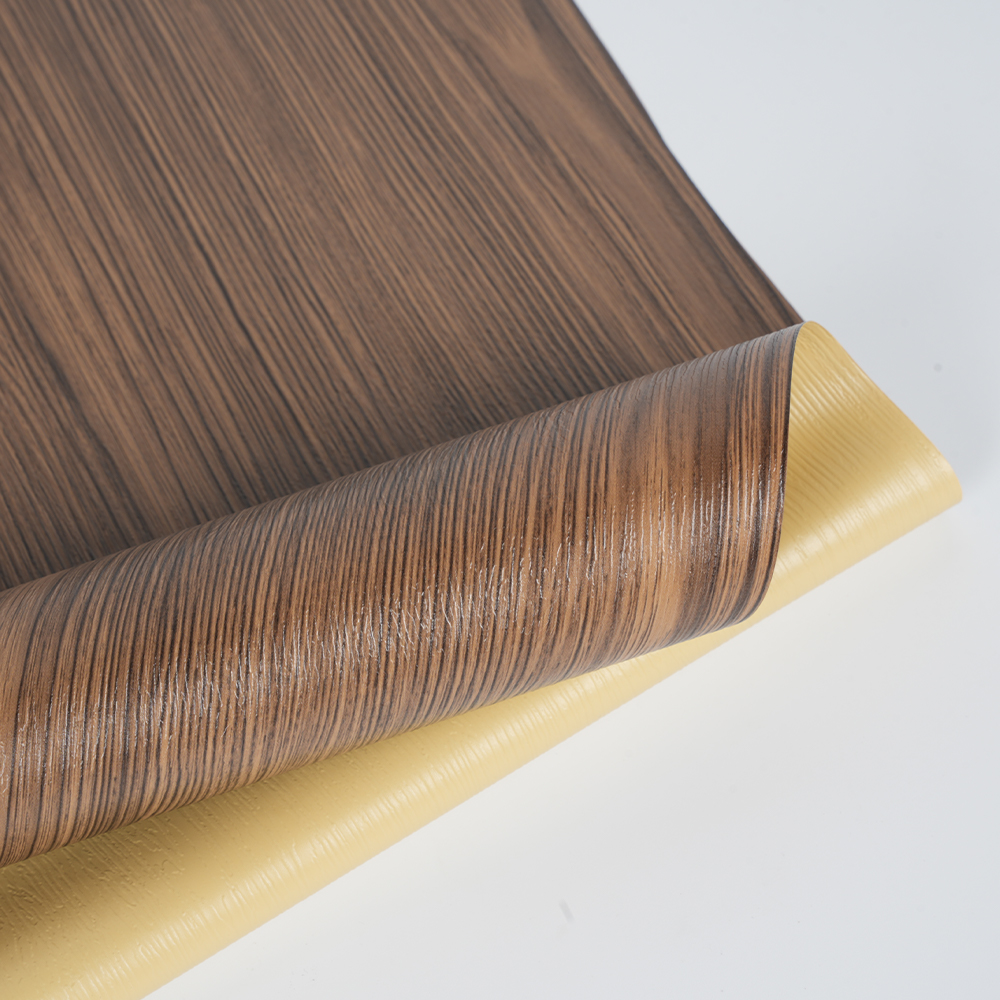
In contrast, embossed PVC film gets its look not from ink, but from physical texture. The word "embossed" means a design is raised on a surface, giving it a three-dimensional feel.
-
How it's made: The process involves passing a heated PVC film through a set of rollers. One of these, the embossing cylinder, has a specific pattern engraved into it. The pressure from the rollers permanently imprints this pattern into the film, creating a tactile texture.
-
What it looks like: The texture can be anything from a subtle wood grain or fabric weave to a more pronounced geometric pattern. The look is sophisticated and adds a premium feel, even if the film is a single, solid color.
-
The trade-off: The texture is an inherent part of the film, making it highly durable. It naturally hides minor scratches and scuffs, which makes it more resilient to daily wear and tear.
-
Where it's used: Because it mimics the look and feel of natural materials so well, embossed PVC film is the go-to choice for things like upholstery, handbags, wall coverings, and vinyl flooring. Its tactile nature adds to both the aesthetic and the function of the product.
Key Differences at a Glance
Ultimately, the choice between these two films comes down to the desired outcome. If you need a product with a bold, intricate image, printing is the clear winner. But if you’re looking to add a durable, realistic texture that elevates the feel of your product, embossed PVC film is the superior choice.
PREV:Beyond Veneer: Discover the Transformative Power of Wood Grain Decorative FilmNEXT:Elevate Your Interiors: A Deep Dive into Indoor PVC Decorative Film
Interested in cooperation or have questions?
Media
-
-
1. Introduction to PVC Decorative Film 1.1 What is PVC Decorative Film? PVC decorative film, also known as vinyl film or PVC foil, is a thin, flexible...
READ MORE -
Introduction — Wood Grain PVC Decorative Film Overview and Market Positioning Wood Grain PVC Decorative Film has emerged as a versatile and innovative...
READ MORE


 +86-13855983898 +86-0559-3588289
 No. 41, Yongjia Avenue, Huizhou District, Huangshan City, Anhui Province, China
Copyright © Huangshan Hengying Industrial Co., Ltd. All Rights Reserved.