

 English
 русский
 عربى
عربىIntroduction to Embossed PVC Film 1.1 Brief Overview of PVC (Polyvinyl Chloride) and Its Properties Polyvinyl chloride (PVC) is one of the most widely...
READ MOREThree-Dimensional Carvings with Embossed PVC Film: Realistic Depth
Three-dimensional carvings no longer demand hours of artisan handwork or expensive solid wood. Embossed PVC decorative film uses advanced vacuum forming to replicate intricate carved surfaces — from ornate floral motifs to deep wood grains — with striking realism, high durability, and easy application across multiple substrates. This technology puts the tactile and visual depth of carving within reach for furniture manufacturing, interior paneling, and even vehicle interiors.
Content
- 1 How Vacuum Forming Creates Convincing 3D Carvings
- 2 Built-In Durability for Long-Lasting Relief
- 3 Bonding Seamlessly with a Wide Range of Substrates
- 4 Practical Comparison: 3D Embossed Film vs. Traditional Carving Methods
- 5 Key Application Sectors for 3D Carved PVC Film
- 6 Ensuring a Long-Lasting 3D Carved Finish
How Vacuum Forming Creates Convincing 3D Carvings
The three-dimensional effect is achieved by heating a specially formulated PVC sheet and drawing it tightly over a precision mold using a vacuum. This process captures every chisel mark, grain line, and undercut detail present in the original master. The result is a film with physical relief typically ranging from 0.2 mm to 1.5 mm, delivering shadows and highlights that shift naturally with the light. Unlike flat printed decors, the texture is consistent with the visual pattern, eliminating the dissonance that reveals a surface as fake.
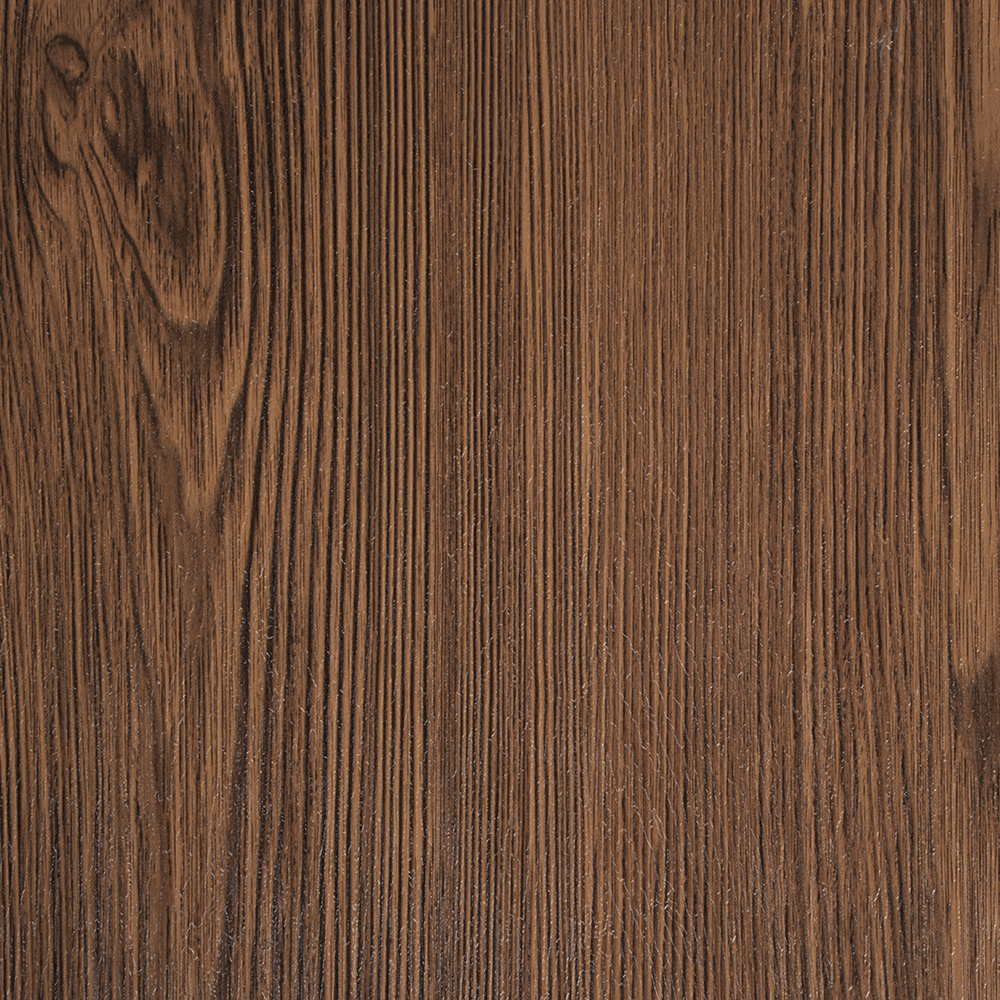
Mold Precision and Pattern Fidelity
Modern CNC-engraved molds reproduce details at tolerances as fine as 0.05 mm. This means even delicate antique carving replicas — with fine leaf veins or narrow fluting — translate accurately onto the film. Combined with high-resolution gravure printing synchronized to the embossment, the printed grain seamlessly follows the raised and recessed areas, reinforcing the illusion of a hand-carved solid piece.
Built-In Durability for Long-Lasting Relief
Real carved wood or plaster is vulnerable to dents and moisture. Embossed PVC film, however, maintains its three-dimensional definition under daily stress. The PVC substrate offers inherent flexibility and impact resistance, with the embossed peaks engineered to resist flattening. In standardized Taber abrasion tests, high-quality embossed films achieve wear resistance of 400–1,000 cycles before visible pattern degradation, depending on the thickness of the protective clear coat applied.
- Scratch and scuff shielding: A UV-cured polyurethane topcoat over the embossment can raise surface hardness to 2H–3H pencil hardness, resisting keys, rings, and routine cleaning.
- Moisture stability: The film does not swell or warp when exposed to humidity, unlike MDF carvings that can deteriorate in under 60% relative humidity without sealing.
- Colorfast depth: Pigments are encapsulated within the PVC layers, guarding the carved appearance against fading for 5–8 years of indoor UV exposure.
Bonding Seamlessly with a Wide Range of Substrates
One of the strongest practical advantages of embossed PVC film is its substrate versatility. After the vacuum forming process, the film can be applied to shaped cores using membrane or profile wrapping presses, forming a permanent, seamless skin. The adhesive bond becomes an integral part of the component, not just a surface layer.
Common Substrates and Their Applications
- MDF (Medium-Density Fiberboard): The most popular core for furniture doors, decorative wall panels, and 3D wall tiles. The smooth surface and consistent density allow the film's relief to remain crisp, with peel strength exceeding 3 N/mm after curing.
- Aluminum and thin steel sheets: Used in appliance fascias, elevator interiors, and vehicle trim. The film adds a warm carved aesthetic to cold metal while providing sound dampening and scratch protection.
- Gypsum and cement boards: Ideal for pre-finished acoustic panels and modular wall systems, where the lightweight carved film doesn't add structural load but massively boosts aesthetic value.
- PVC foam boards: Perfect for bathroom and kitchen cabinetry, creating fully waterproof carved doors that won't delaminate even after 1,000+ hours in humid environments per ASTM D4585 testing.
Practical Comparison: 3D Embossed Film vs. Traditional Carving Methods
| Feature | Hand-Carved Wood | CNC-Carved MDF | Embossed PVC 3D Film |
|---|---|---|---|
| Relative cost per panel | Very High | High | Low |
| Reproducibility | Unique, not identical | Identical pieces | Identical across thousands of units |
| Moisture resistance | Needs sealed finish | Poor, swells easily | Excellent, non-porous |
| Weight (typical 4×8 ft panel) | 15–25 kg | 12–18 kg | 6–10 kg (on MDF) |
| Impact resistance | Dents easily | Brittle carved edges | Flexible, rebounds from light impacts |
The data underscores why manufacturers choose embossed film for high-volume production of three-dimensional carved components: consistent quality, superior resistance to daily hazards, and dramatic cost savings without sacrificing the perception of genuine carving.
Key Application Sectors for 3D Carved PVC Film
The combination of tactile realism and practical strength opens doors across multiple industries. Here are the most prevalent uses today:
- Furniture doors and drawer fronts: Antiqued carved patterns on kitchen cabinets and wardrobe doors give a premium feel while surviving knocks, steam, and frequent cleaning.
- Decorative wall panels and 3D tiles: Lightweight, easy-to-install panels with deep geometric or floral carvings transform reception areas, hotels, and retail spaces without structural reinforcement.
- Vehicle interior trims: Dashboard inlays, door inserts, and seat back panels gain a sophisticated carved wood or carbon-fiber texture that resists temperature swings from -30°C to 70°C.
- Building material components: Embossed PVC-wrapped moldings, columns, and ceiling medallions bring architectural carving detailing to spaces where moisture or impact would destroy real wood or plaster.
- Electronic device housings: High-end speakers and audio equipment use subtle carved textures to add tactile and visual luxury to molded plastic bodies.
Ensuring a Long-Lasting 3D Carved Finish
To fully realize the lifespan potential of three-dimensional embossed film, a few best practices should be followed during design and use:
- Match the film grade to the application: choose a minimum thickness of 0.3 mm for vertical surfaces and 0.5 mm for horizontal or high-traffic areas to preserve relief depth.
- Avoid direct contact with abrasive cleaners; simply wipe with a soft, damp cloth and mild detergent. The embossed texture is easy to clean if grooves aren't packed with wax or polish.
- Protect edges from moisture ingress with proper sealing or edge banding, especially in wet environments. The film itself is waterproof, but moisture can attack the substrate through an unsealed edge.
- When using on metal, ensure the surface is primed to accept the adhesive and that any sharp corners are slightly radiused to avoid stress points that could lift the film over time.
Embossed PVC decorative film transforms the concept of three-dimensional carvings from a costly, fragile craft into an accessible, industrial-grade surface solution. By replicating every nuance of a carved original and bonding powerfully to everyday substrates, it gives furniture, interiors, and vehicles enduring artistic depth that handles the real world with ease.
Interested in cooperation or have questions?
Media
-
-
1. Introduction to PVC Decorative Film 1.1 What is PVC Decorative Film? PVC decorative film, also known as vinyl film or PVC foil, is a thin, flexible...
READ MORE -
Introduction — Wood Grain PVC Decorative Film Overview and Market Positioning Wood Grain PVC Decorative Film has emerged as a versatile and innovative...
READ MORE


 +86-13855983898 +86-0559-3588289
 No. 41, Yongjia Avenue, Huizhou District, Huangshan City, Anhui Province, China
Copyright © Huangshan Hengying Industrial Co., Ltd. All Rights Reserved.