

 English
 русский
 عربى
عربىIntroduction to Embossed PVC Film 1.1 Brief Overview of PVC (Polyvinyl Chloride) and Its Properties Polyvinyl chloride (PVC) is one of the most widely...
READ MOREPVC Decorative Film with Smooth Surface: Gloss, Durability & Applications
The surface finish of a decorative film determines everything the end user sees and touches — for years. A film that looks sharp on the showroom floor but dulls within eighteen months, develops an orange peel texture under temperature change, or fades where sunlight reaches it is not a decorative solution; it is a problem deferred. PVC decorative film with a smooth surface was developed to address exactly these failure modes, and its adoption across kitchen cabinetry, bathroom furniture, wardrobe doors, and commercial fit-outs reflects the fact that it consistently delivers where paint and natural materials fall short.
This article covers how smooth-surface PVC decorative film is made, what its performance characteristics mean in practice, and where it outperforms the alternatives.
Content
- 1 What Is PVC Decorative Film with a Smooth Surface?
- 2 Surface Appearance: Gloss, Colour Stability, and the Orange Peel Problem
- 3 Design Versatility: Wood Grain, Marble, Stone, and Solid Colour
- 4 Our PVC Decorative Film with Smooth Surface: Product Overview
- 5 Waterproof, Moisture-Proof, and Easy to Clean: Performance in Demanding Environments
- 6 Scratch Resistance and Durability: The Case Against Paint and Solid Wood
- 7 Applications: Where Smooth-Surface PVC Decorative Film Performs Best
What Is PVC Decorative Film with a Smooth Surface?
PVC decorative film — also known as PVC wrap or PVC laminate — is a multi-layer polymer film applied to substrate surfaces (MDF, particleboard, plywood, aluminium profile, or PVC board) to provide a finished decorative and protective surface. The smooth-surface variant is characterised by a flat, uniform top layer that produces a glossy, mirror-like or satin finish without surface texture relief.
The film structure typically consists of a base PVC layer that provides dimensional stability and adhesion surface, a printed decorative layer that carries the colour, pattern, or texture design, and a transparent topcoat that determines the surface gloss level, scratch resistance, and chemical resistance of the finished film. In smooth-surface films, this topcoat is calendered or cast to a flat profile, eliminating the micro-texture variation that produces an orange peel effect in lower-quality or poorly processed films.
The result is a surface where colour appears saturated and uniform, light reflects consistently across the entire panel, and the visual representation of wood grain, marble, or solid colour is rendered with the clarity that distinguishes a premium surface finish from a commodity laminate.
Surface Appearance: Gloss, Colour Stability, and the Orange Peel Problem
Surface appearance in a decorative film is determined by three interrelated factors: gloss level, colour accuracy, and surface flatness at the microscopic scale.
Gloss level is measured in gloss units (GU) at a specified angle — typically 60° for mid-range finishes and 20° for high-gloss applications. Smooth-surface PVC decorative film is available across a gloss range from high-gloss (above 80 GU at 60°) through satin and silk finishes to low-sheen options that read as matte from a distance but retain the smooth tactile quality of the surface. The gloss level selected affects the visual weight of the finished piece: high-gloss finishes make colours appear more vivid and surfaces appear larger; lower-gloss finishes reduce light reflection and are often preferred in residential settings where visual warmth is a priority.
Colour stability over time is a function of the pigment system used in the decorative layer and the UV resistance of the topcoat. Fade-resistant and UV-resistant formulations in the topcoat absorb or reflect UV radiation before it reaches the pigment layer, slowing the photodegradation that causes colours to shift toward yellow or grey over time. This property is particularly important for surfaces that receive indirect daylight — cabinet doors adjacent to windows, furniture in sun-facing rooms — where the UV exposure is significant over a multi-year timeframe.
The orange peel effect — a surface undulation that resembles the skin of an orange at close inspection — is one of the most common quality defects in decorative film production. It originates from inconsistent topcoat application thickness, temperature variation during calendering, or incompatibility between the topcoat and the decorative layer beneath it. In a smooth-surface film produced to consistent process standards, the topcoat is applied and cured at tightly controlled parameters that eliminate this variation, producing a surface that is flat to the limit of visual and tactile perception.
Our PVC decorative film with smooth surface range is produced with process controls at each stage of topcoat application to maintain gloss uniformity and surface flatness across the full roll width and from batch to batch.
Design Versatility: Wood Grain, Marble, Stone, and Solid Colour
One of the practical advantages of PVC decorative film over natural surface materials is the design range it can deliver from a single manufacturing platform. The decorative print layer can reproduce virtually any visual pattern with the colour accuracy and repeat precision of modern gravure or digital printing, without the cost, supply variability, or physical limitations of the natural material it represents.
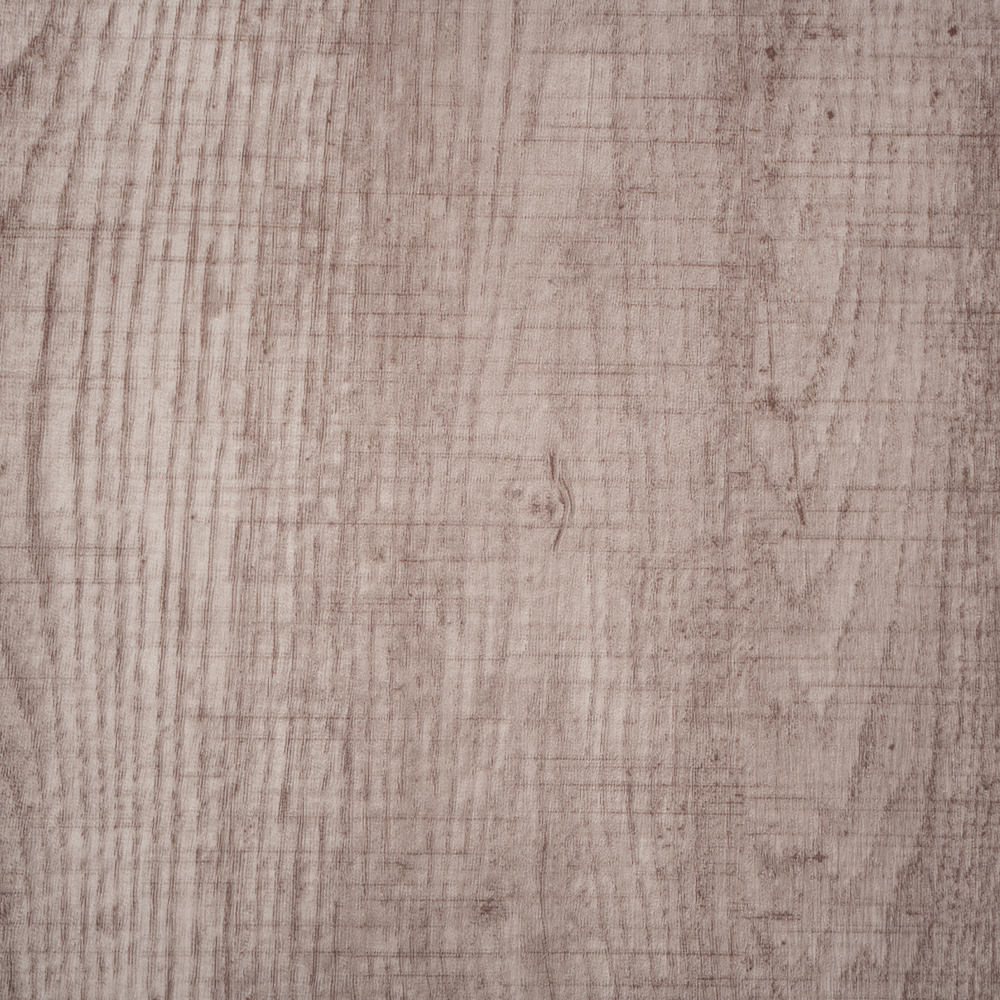
Wood grain designs reproduce the grain direction, knot structure, ray pattern, and tonal variation of specific timber species — from light ash and natural oak through to dark walnut and ebony. High-realism wood grain designs are printed at sufficient resolution that the pattern reads as authentic at normal viewing distance, and the smooth surface finish allows the grain to appear without the textural distraction of an embossed surface pattern. For applications where the tactile quality of real wood is also required, our soft-touch wood grain PVC decorative film combines a realistic print with a surface that mimics the warmth of natural timber under the hand.
Marble and stone patterns reproduce the veining, colour variation, and crystalline structure of marble, travertine, quartzite, and other stone types that would be prohibitively expensive or impractical to use as actual stone panels in furniture or cabinetry. The smooth surface is particularly well-suited to marble reproductions, since the reflective quality of polished stone is integral to its visual character and would be lost on an embossed or textured surface.
Solid colour films in the smooth-surface construction deliver the clean, even appearance required for contemporary and minimalist interior styles. A solid colour PVC film with a consistent gloss level and no surface variation reads on-panel as a paint finish — but with the durability and moisture resistance that paint on MDF cannot match. Our high gloss single colour PVC decorative film is the direct equivalent of a high-gloss lacquer finish, at a fraction of the production cost and with superior practical performance.
Our PVC Decorative Film with Smooth Surface: Product Overview
PVC decorative film (also known as PVC wrap or PVC laminate) with a smooth surface features a glossy surface with an even texture, offering clear and stable colors that are fade resistant and UV resistant, with no formation of an orange peel effect. It has high realism and can be customized in various textures—such as solid colors, wood grain, marble texture, and stone patterns—to meet different style needs, with a visual effect that closely resembles natural materials like real wood and stone.
It also has excellent waterproof and moisture-proof properties, making it highly suitable for high humidity environments like kitchen cabinets and bathroom vanities. The smooth surface makes stains easy to wipe off, offering stain resistant and easy to clean performance, allowing for quick and convenient daily cleaning with low maintenance requirements.
Compared to solid wood or lacquered finishes, PVC decorative film is more cost-effective and affordable while offering high durability, scratch resistant properties, and a long service life, making it an ideal solid wood alternative for interior decoration, furniture surfaces, wardrobe doors, and commercial spaces.
Waterproof, Moisture-Proof, and Easy to Clean: Performance in Demanding Environments
The environments where decorative surfaces face the hardest test are those combining moisture, temperature variation, grease, and frequent contact — kitchens and bathrooms. These are also the environments where natural wood and MDF with paint or foil finishes most frequently fail, through swelling at edges, delamination at joints, or staining that cannot be removed without damaging the finish.
PVC is inherently waterproof — it does not absorb water, does not swell, and does not support the mould growth that wood-based substrates can develop when moisture reaches the core. In decorative film form, the PVC layer creates a continuous waterproof barrier across the panel surface, preventing moisture ingress at the face. Edge sealing quality of the panel assembly determines whether the substrate itself is protected, but the film surface requires no special treatment to perform in high-humidity environments.
The smooth, non-porous surface of a glossy PVC decorative film means that kitchen grease, fingerprints, water marks, and most household cleaning products wipe clean with a damp cloth. There is no grain or texture relief to trap food residue, no porous coating to absorb stains, and no surface finish that degrades with regular cleaning product contact. For specifiers selecting surface materials for rental property kitchens, commercial food service fitouts, or high-traffic retail environments, this low-maintenance characteristic translates directly to reduced operating cost over the surface's service life.
Scratch Resistance and Durability: The Case Against Paint and Solid Wood
The durability comparison between PVC decorative film and the alternatives it most directly competes with — painted MDF, lacquered finishes, and solid wood — consistently favours the film in real-world use conditions.
Painted and lacquered finishes are surface coatings applied in thin layers; their scratch resistance is determined by the hardness of the topcoat, which is limited by the flexibility required to prevent cracking at panel edges and joints. A domestic kitchen in normal use generates scratch events from cookware, utensils, cleaning tools, and the general contact of daily life. Painted cabinet doors show this wear within two to three years of installation; the marks are usually impossible to repair without visible touch-up.
PVC decorative film with a scratch-resistant topcoat distributes scratch forces across a layer with greater thickness and toughness than a paint topcoat. The film flexes slightly rather than fracturing at the point of impact, and its scratch resistance specification can be matched to the application — a standard residential kitchen requires a different scratch resistance grade than a commercial reception desk or retail counter. Our anti-scratch wood grain PVC decorative film and corresponding anti-scratch ranges in marble and solid colour are formulated for applications where surface durability is the primary specification driver.
Solid wood, despite its premium positioning, is dimensionally unstable in humidity-variable environments, prone to surface marking from water rings and heat, and expensive both to purchase and to refinish when damaged. For the large majority of interior furniture and cabinetry applications, PVC decorative film on a stable engineered substrate delivers better practical performance at significantly lower cost — making it a rational material choice rather than simply a budget compromise.
Applications: Where Smooth-Surface PVC Decorative Film Performs Best
The performance profile of smooth-surface PVC decorative film — glossy appearance, moisture resistance, scratch resistance, and low maintenance — aligns most directly with a set of applications where these properties are all required simultaneously.
Kitchen cabinetry is the highest-demand residential application, combining moisture, heat, grease, and mechanical contact in a single environment. Smooth-surface PVC film on MDF or particleboard cabinet doors and drawer fronts delivers the high-gloss or satin aesthetic of a lacquered kitchen at a fraction of the production cost, with superior moisture resistance and comparable scratch performance.
Bathroom vanities and furniture require sustained moisture resistance that paint and natural wood cannot provide without specialist treatment. PVC decorative film is the standard surface material for flat-pack bathroom furniture in most markets, precisely because its waterproof performance is unconditional rather than dependent on perfect application of a sealant or coating.
Wardrobe doors and bedroom furniture benefit from the design flexibility of PVC decorative film — the ability to match a wood grain or solid colour to other elements in a room without the cost of real timber veneer — and from the scratch resistance that protects against the jewellery, belt buckles, and general contact that wardrobe surfaces accumulate.
Commercial spaces including retail fitouts, hotel rooms, office furniture, and hospitality environments use smooth-surface PVC decorative film for its combination of visual quality, durability, and the ability to reproduce a consistent finish across large quantities of panels from batch to batch. Contact our team through our company page to discuss specifications and sampling for your next project.
PREV:Marble PVC Decorative Film: Performance, Applications & How to ChooseNEXT:What Is EB Excimer Decorative Film? Why It Costs More Than Standard PVC Film
Interested in cooperation or have questions?
Media
-
-
1. Introduction to PVC Decorative Film 1.1 What is PVC Decorative Film? PVC decorative film, also known as vinyl film or PVC foil, is a thin, flexible...
READ MORE -
Introduction — Wood Grain PVC Decorative Film Overview and Market Positioning Wood Grain PVC Decorative Film has emerged as a versatile and innovative...
READ MORE


 +86-13855983898 +86-0559-3588289
 No. 41, Yongjia Avenue, Huizhou District, Huangshan City, Anhui Province, China
Copyright © Huangshan Hengying Industrial Co., Ltd. All Rights Reserved.